Key Specifications
 Prime Delivery • 30-Day Returns
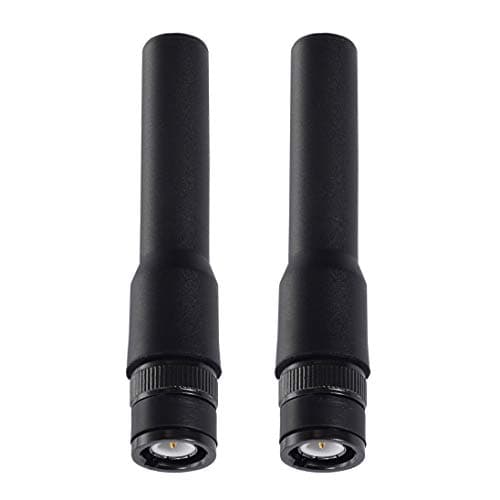
Bingfu Ham Radio BNC Male Soft Antenna 2-Pack Compatible with Uniden SR30C Bearcat BC125AT BCD436HP BC75XLT BCD325P2 Police Scanner Frequency Counter Two Way Radio
If you have a radio scanner (or comparable receiver) with a detachable or external‑antenna port, pairing it with a capable antenna makes a big difference to signal reception, range, and clarity. The Bingfu 20‑1300 MHz antenna aims to provide a flexible, broad‑frequency antenna solution that can receive a wide spectrum of frequencies — VHF, UHF, even parts of HF/air/other bands up to 1300 MHz — so that you can pick up a variety of radio traffic: police/fire/EMS, public‑safety, ham radio, air/rail, weather, etc. Because it uses a magnetic base (or sometimes adhesive mount), it’s suitable for mobile or temporary installation — e.g. on a car roof, metal shelf, or base‑station — without permanent mounting.
Key Features
If you have a radio scanner (or comparable receiver) with a detachable or external‑antenna port, pairing it with a capable antenna makes a big difference to signal reception, range, and clarity. The Bingfu 20‑1300 MHz antenna aims to provide a flexible, broad‑frequency antenna solution that can receive a wide spectrum of frequencies — VHF, UHF, even parts of HF/air/other bands up to 1300 MHz — so that you can pick up a variety of radio traffic: police/fire/EMS, public‑safety, ham radio, air/rail, weather, etc. Because it uses a magnetic base (or sometimes adhesive mount), it’s suitable for mobile or temporary installation — e.g. on a car roof, metal shelf, or base‑station — without permanent mounting.
Available Colors
Key Considerations
Frequency Compatibility & Coverage Range — The advertised 20 MHz–1300 MHz coverage is broad, which means in theory you can receive many types of radio transmissions (VHF/UHF, ham, public safety, air, etc.). But your radio/scanner must also support those frequency bands. If your scanner only supports narrower frequency ranges, this wide antenna may be overkill or not fully utilized.
Connector & Impedance Matching (BNC & 50 Ω) — Most scanners and radios that support external antennas expect a 50 Ω load and use BNC (or adapter) connectors. Mismatch in impedance or connector might degrade performance or even cause damage. For best performance, ensure the radio input matches (BNC 50 Ω) or use proper adapters.
VSWR & Gain — Signal Quality & Efficiency — The antenna claims a VSWR < 2.0, which is acceptable for general scanner and ham‑radio use (low reflected power, efficient radiation/reception). Antenna gain (some variants list ~5–7 dBi) affects how strong reception may be — higher gain generally helps reach weaker, distant signals.
Mounting Method & Mobility — Magnetic base (or adhesive mount) means easy installation and removal, useful for mobile setups (car, temporary monitoring), but less ideal for fixed, permanent antenna installations — where a proper mount or rooftop antenna might give better performance.
Use Case: Scanner / Receiver, Not Transmitter (if license or regulations apply) — If you plan to receive only, this antenna is fine. If you plan to transmit, you need to verify local regulations and whether your radio + antenna are designed/authorized for transmission (power rating, licensing, frequency permissions). For many scanner‑antenna combos, the use is strictly reception.
It’s crucial that your scanner or radio supports the frequency bands (20 MHz–1300 MHz) and uses a compatible connector/impedance. Otherwise, the antenna won’t perform well.Good VSWR (< 2.0) and adequate gain (5–7 dBi typical for wideband antennas) lead to more efficient signal reception and better sensitivity. These specs make the antenna suitable for general monitoring across many bands.
These factors represent the most critical aspects that will impact your satisfaction with this product.
Customer Reviews
These antennas work great, just know what you're getting into.
Didn't expect miracles from these little stubbies. I saw a review with testing (SWR, TX/RX range, etc) and bought them mainly for convenience and short-range use on my GT-5R and UV-21R as the shorter antennas make it easier to carry the HT on my belt.